


General knowledge about native species should be seen as a cornerstone for biodiversity conservation. Developing and strengthening relationships with our environment based on the knowledge of native flora, fauna, and fungi that promote the appreciation, conservation, and sustainable use of biodiversity is essential for creating a healthy biological identity of a region, thus fostering a culture of sustainability.
The renowned scientist and naturalist Edward O. Wilson beautifully wrote: "Nature holds the key to our aesthetic, intellectual, cognitive, and even spiritual satisfaction." This phrase concretely reinforces the idea that humans are born with a strong emotional affiliation towards other living organisms, a concept known as biophilia. Who hasn't been enchanted by watching a brilliant hummingbird sip nectar from a flower? Or by observing the intricate patterns on a butterfly's wings? However, our current way of living has limited our experience and interaction with the natural world, triggering a collective ignorance of our surroundings.
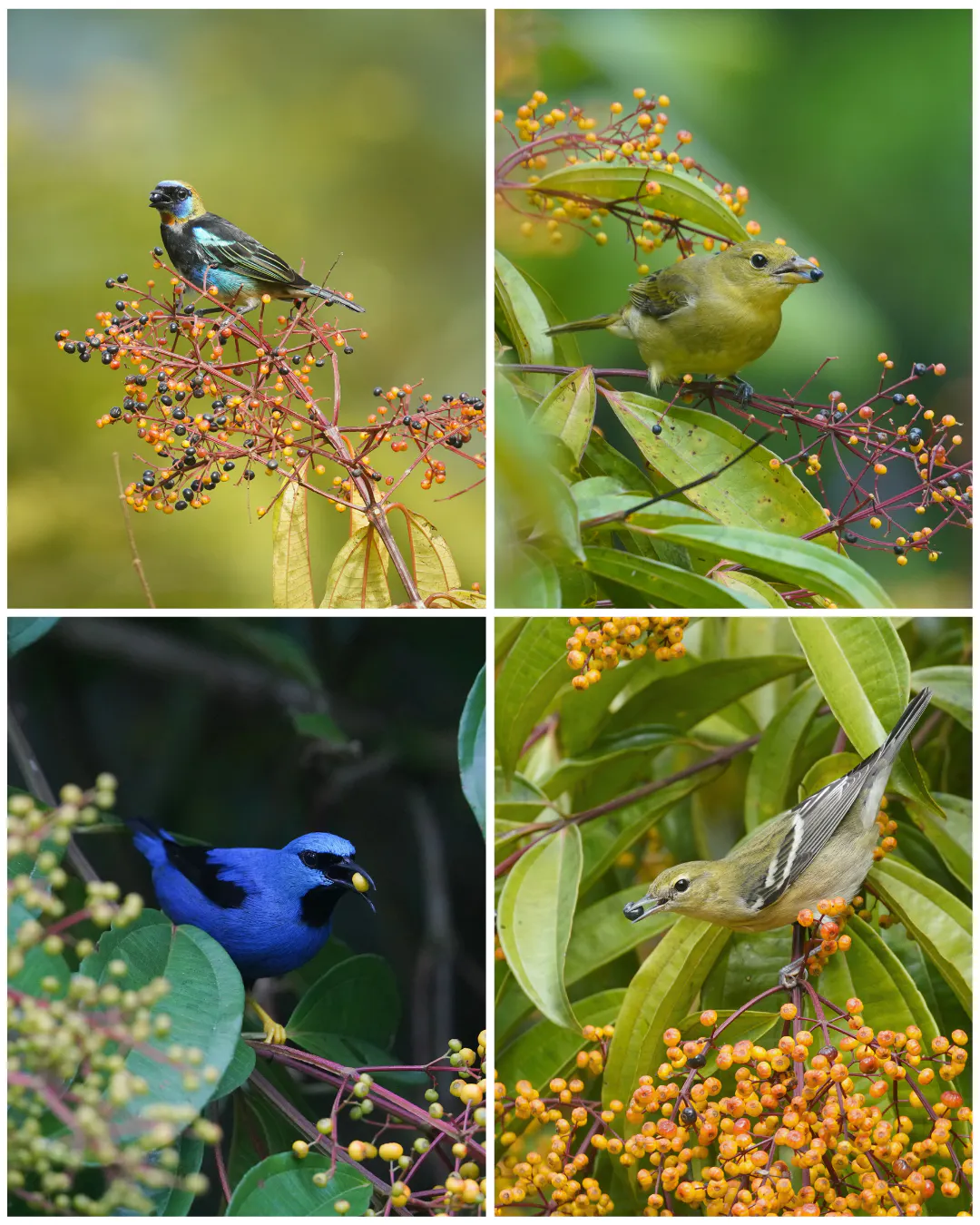
Dozens of both resident and migratory birds eat the fruits of Miconia longifolia trees in the Corredor Azul area.
When we stop naming nature, we also stop seeing it. How many of us can recognize more than five species of native trees in our community? How many of us have the opportunity to contemplate nature daily? How many natural spectacles occur daily before our senses, yet we miss them because our senses seem to be asleep? Many of us have forgotten what it means to be in contact with the living world.
Environmental education and bioliteracy are powerful tools to combat the monster of misinformation and disconnection we currently have with the natural world. Through field experience and access to information, children, youngsters, and adults discover a complex, wonderful, and fascinating world that sparks wonder, curiosity and imagination, making visible the fact that humanity's wellbeing directly depends on a healthy planet. To know nature is, ultimately, to know ourselves.
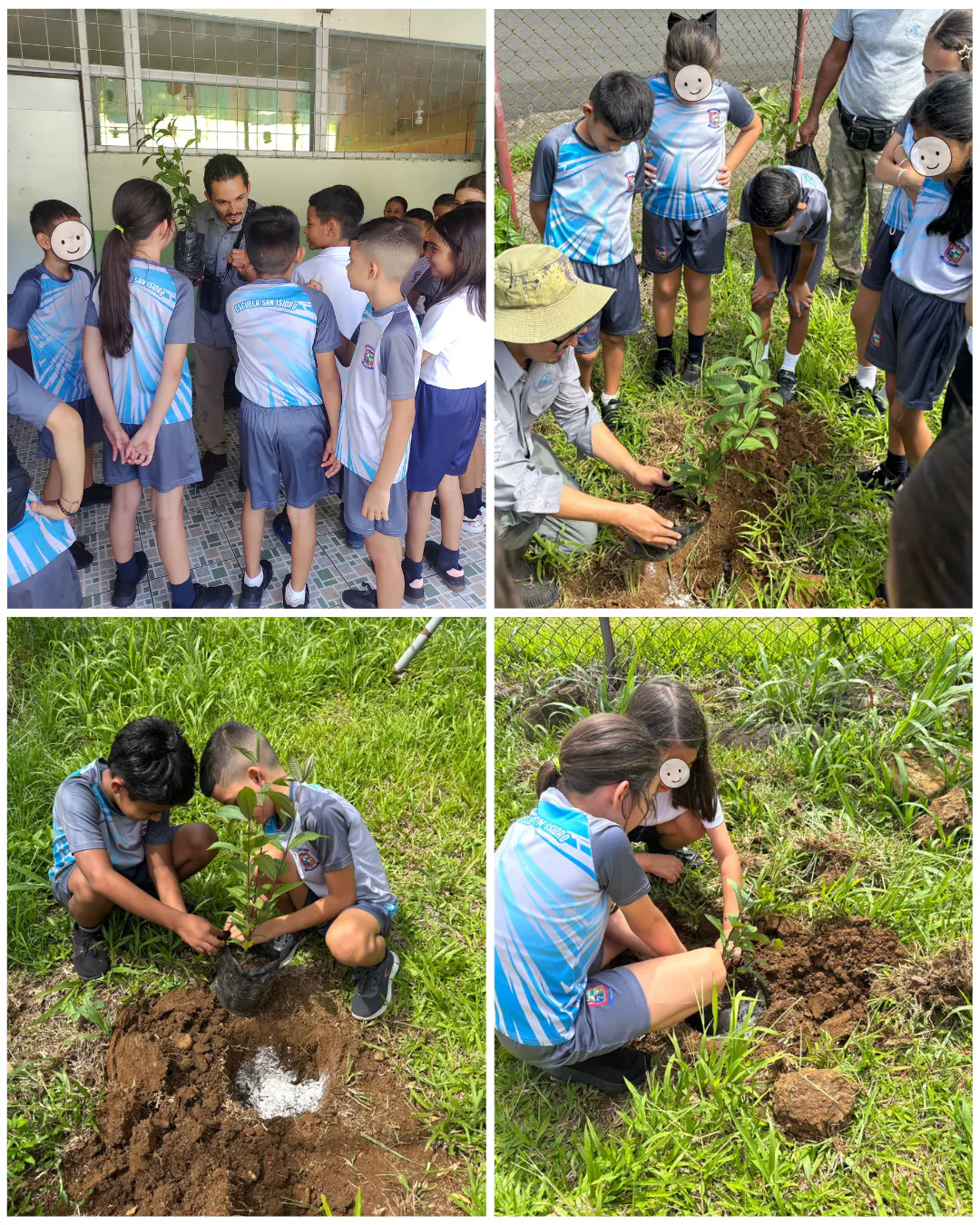
Planting Miconia longifolia trees with the students of the San Isidro School, Siquirres. During the activities kids learned about ecosystem services and ways to protect birds in their homes. September 2025.
At Cerúlea we have incorporated these ideas as part of the habitat improvement efforts of the Corredor Azul (Blue Corridor), where, —besides reproducing our own native trees for reforestation and ecological restoration—we have actively been working on a environmental education program with different communities of Siquirres and Guácimo, Limón, Costa Rica. This education process includes a wide variety of activities that help to promote active learning, participation, dialogue, and critical reflection. The activities include nature journaling, guided nature walks, storytelling, planting native trees on properties allied to the project and beautifying schools using native plants.
Every time these educational sessions are held, we are amazed by the excitement and interest the children show when learning and exploring nature with us. Through these activities, we expect that in a few years, many of the trees being planted today will grow and become an important teaching resource for various subjects, such as science, mathematics, and arts. And just like trees, we hope that many of these children will form part of the new generation of nature ambassadors that the world is really needing.