

Dawn of hope
On July 11th, 2025, I had the privilege of experiencing my first dawn chorus at the Cerúlea Nature Reserve headquarters. Although we had visited the reserve on several occasions, it was from July 10 to 13 that we were able to camp for the first time in the heart of Cerúlea and carry out various tasks of exploration, maintenance, and documentation of different organisms.
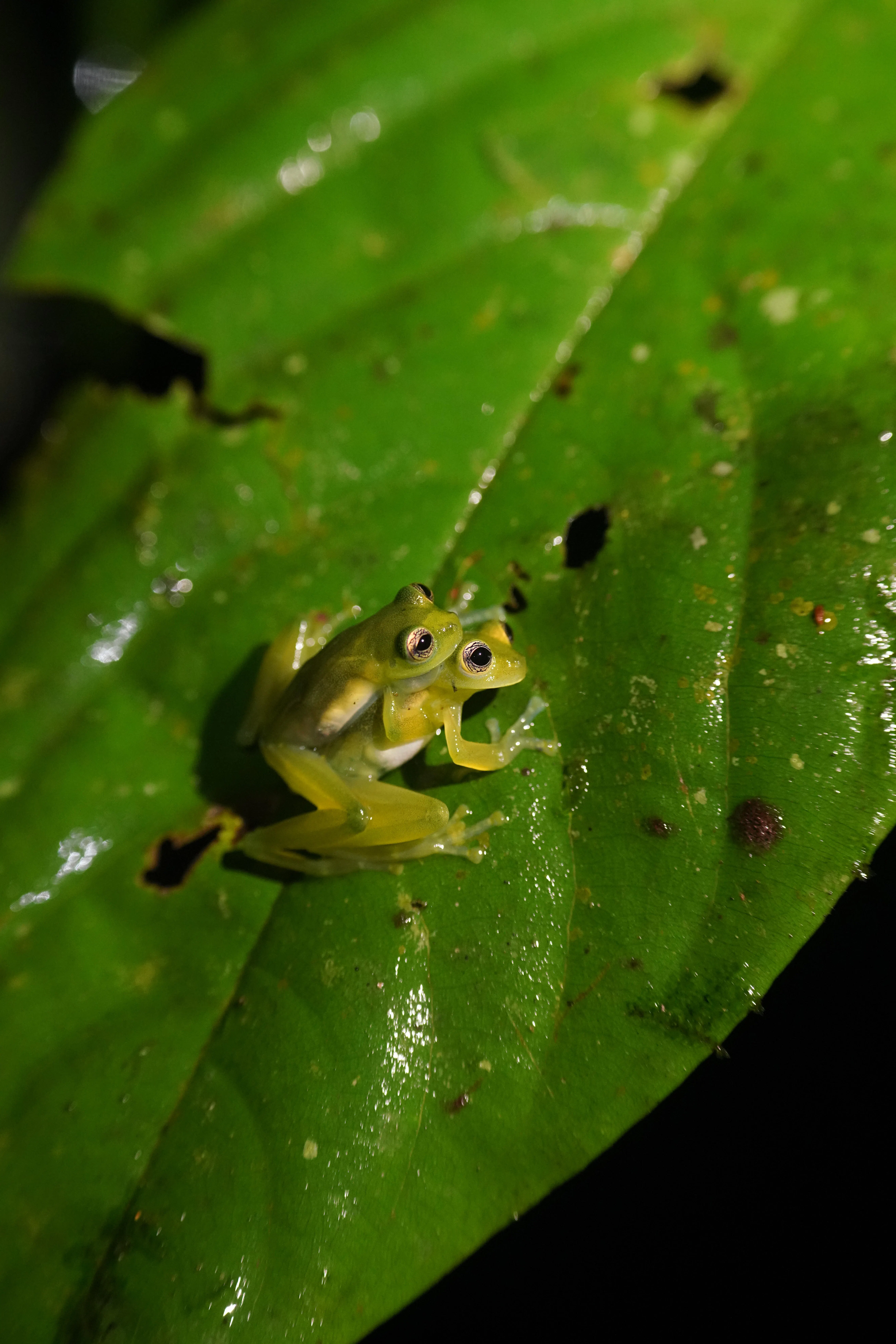
The night of July 10th was filled with the sounds of nocturnal birds such as the Great Potoo, Crested Owl, Mottled Owl, and Common Pauraque, which announced their presence at different times during a cloudy night. Ernesto Carman and I took the opportunity to explore two streams in search of amphibians. It was supposed to be a quick walk after dinner, because it had been an exhausting day walking with heavy loads for several kilometers to the reserve, but you know how these things go... In the end, we ended up exploring ravines and forests for several hours and found a great diversity of frogs, among which six species of glass frogs stand out, such as Teratohyla spinosa, Sachatamia albomaculata, and Sachatamia ilex, as well as the locally rare and restricted Hyloscirtus palmeri and the beautiful salamander Bolitoglossa colonea, which is a regional endemic species (found only in Costa Rica and Panama).
After three hours of surprisingly restful sleep at the camp, I was awakened at 4:45 a.m. by a noisy Collared Forest Falcon that began vocalizing not far from us, followed two minutes later by the unmistakable howls of Mantled Howler Monkeys and a chorus of at least six Rufous Motmots that dominated the soundscape for several minutes. At 4:55 a.m., Northern Barred Woodcreepers began their loud, clear whistles, followed by a Barred Forest Falcon—the second species of forest falcon present that morning! The minutes passed and new species joined the beautiful morning orchestra that unfolds in the natural amphitheater that we proudly and somewhat boldly call our reserve. Here are the members of the orchestra that began at 5:00 a.m., in order of appearance: Broad-billed Motmot, Wedge-billed Woodcreeper, Black-crowned Antshrike, Plain-brown Woodcreeper, Brown Jay, Great Tinamou, Yellow-throated & Keel-billed Toucans, Short-billed Pigeon, Gartered Trogon. In addition, there were some small canopy birds that began to vocalize high in the surrounding trees, such as Lesser Greenlets, Mistletoe Tyrannulets, Black-capped Pygmy Tyrant, Brown-capped Tyrannulet, Olive-backed Euphonia, Shining Honeycreeper, Rufous-winged Tanagers, and Golden-hooded Tanagers.
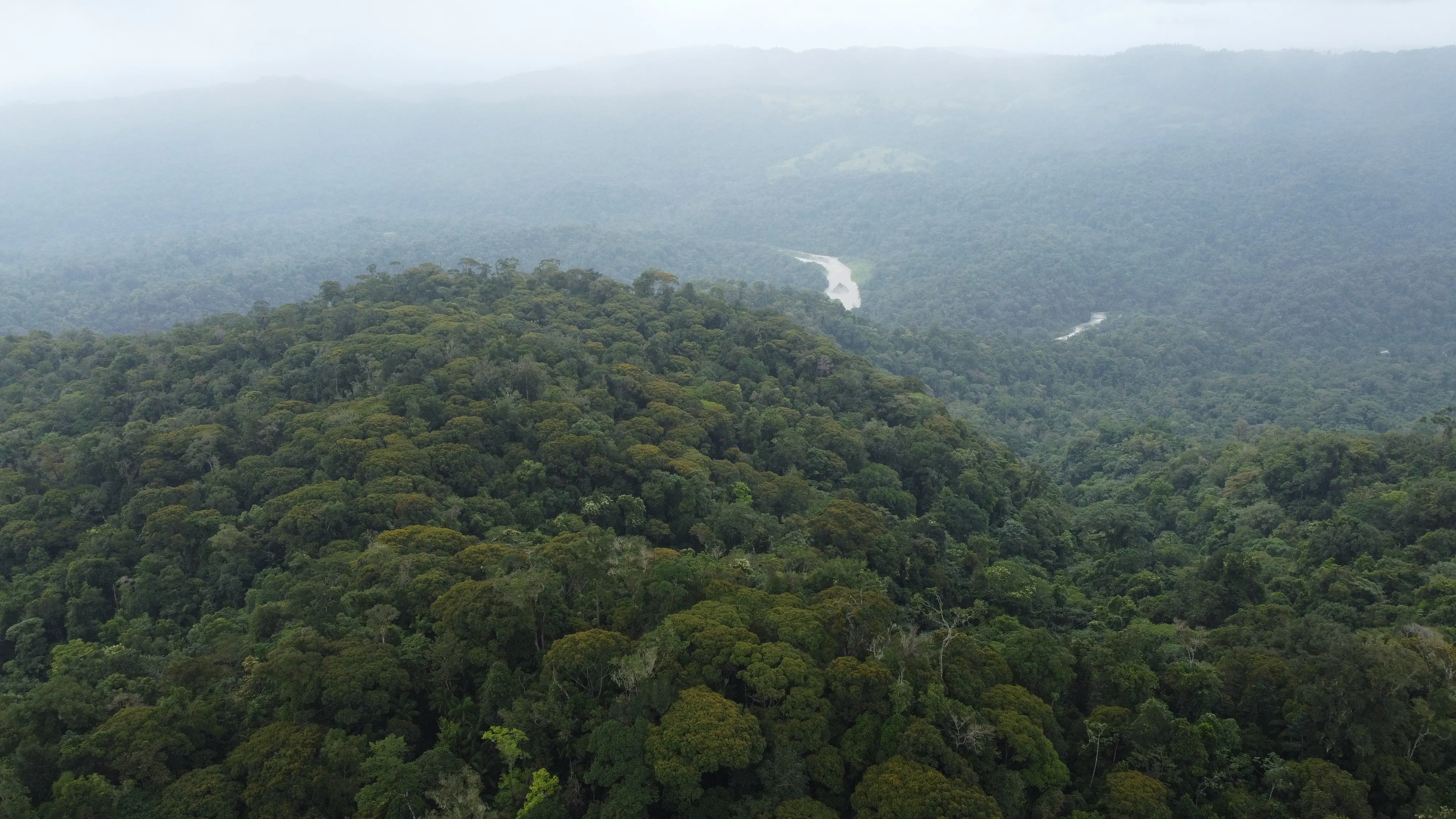
There's nothing like the unparalleled sensation of opening your senses and letting nature's restorative energy do its work. If you haven't tried it, I highly recommend it! In the sky, I began to hear the loud flapping sound of Montezuma Oropendolas flying westward, one after another, and on the nearby mountain, Mealy Amazons were noisily strolling around, as were the smaller and more restless, Brown-hooded Parrots. Meanwhile, in the dark undergrowth, the sweet sounds of Blue-black Grosbeaks and White-breasted Wood-wrens stood out, contrasting with the sound of the wings of a White-collared Manakin flying low to feed on a Heliconia pogonatha at the edge of the forest.
Suddenly, I heard hoarse, harsh and resonant sounds that seemed to be gradually getting closer. It could only be the wonderful Great Green Macaws. One of the largest members of the Psittacidae family on the continent, and sadly considered critically endangered, with fewer than 1,000 adult individuals in the world. My excitement became apparent when I saw 21 individuals in front of me coming to eat from a spectacular tree locally known as Campano or Titor (Sacoglottis trichogyna), which was laden with fruit. The morning light illuminated the bright feathers of these enormous birds as they wandered among the treetops feeding on the fruit. My peace was interrupted by the fact that I did not have my camera nearby, so I ran out to get it so I could immortalize this moment. This observation means that we have officially confirmed the presence of trees critical to the Great Green Macaw in our reserve. This is cause for celebration!
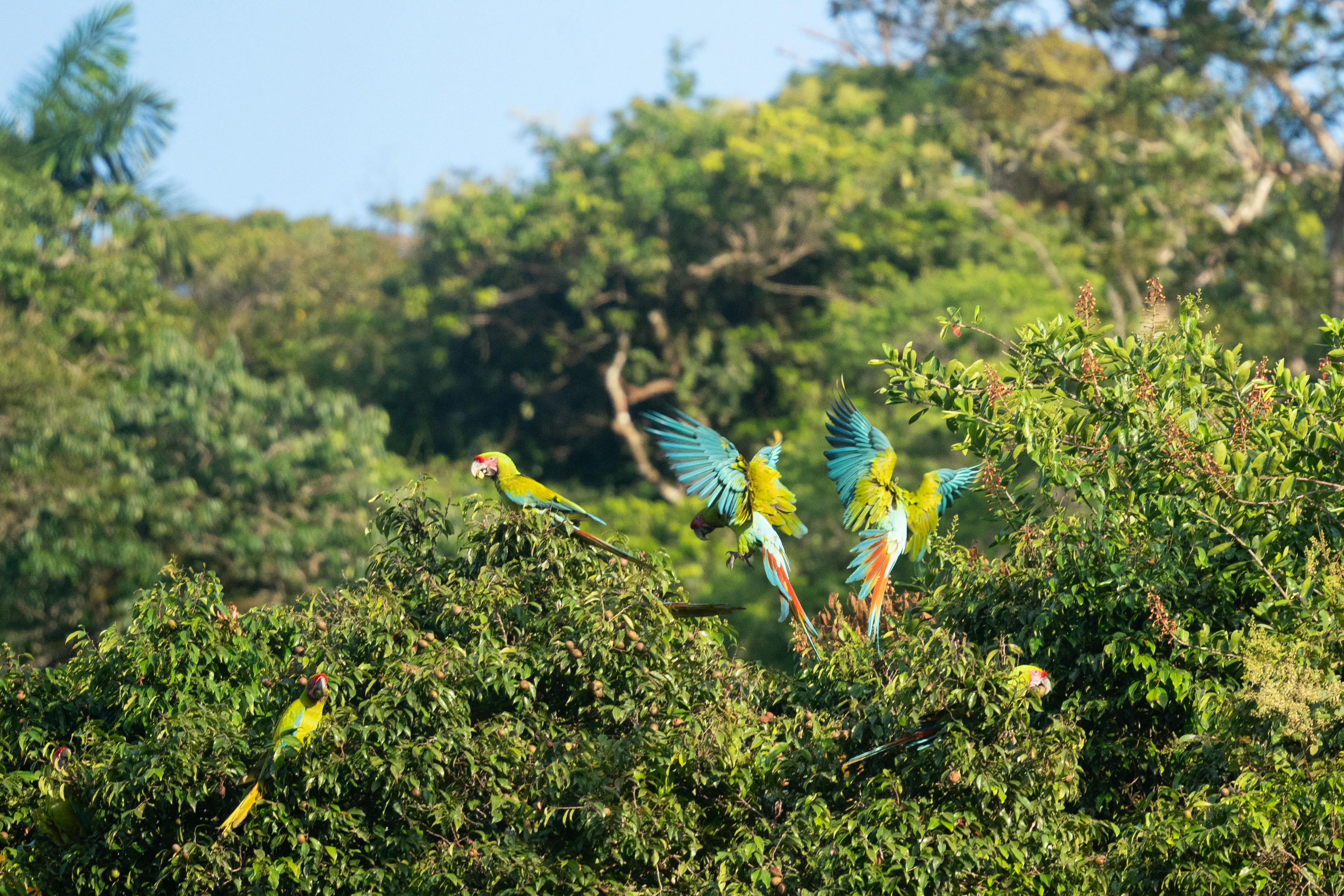
The Campano is a slow-growing tree that can exceed 35 m in height and is distributed from Nicaragua to Panama. Although the tree species most commonly associated with the Great Green Macaw is the famous Tonka bean tree (Dipteryx oleifera), this tree species doesn't naturally occur at the elevation of our reserve. Therefore, finding Campano trees is reassuring, as observations by various authors have determined that when Tonka bean tree fruits are scarce, the Macaws choose to consume Campano fruits.
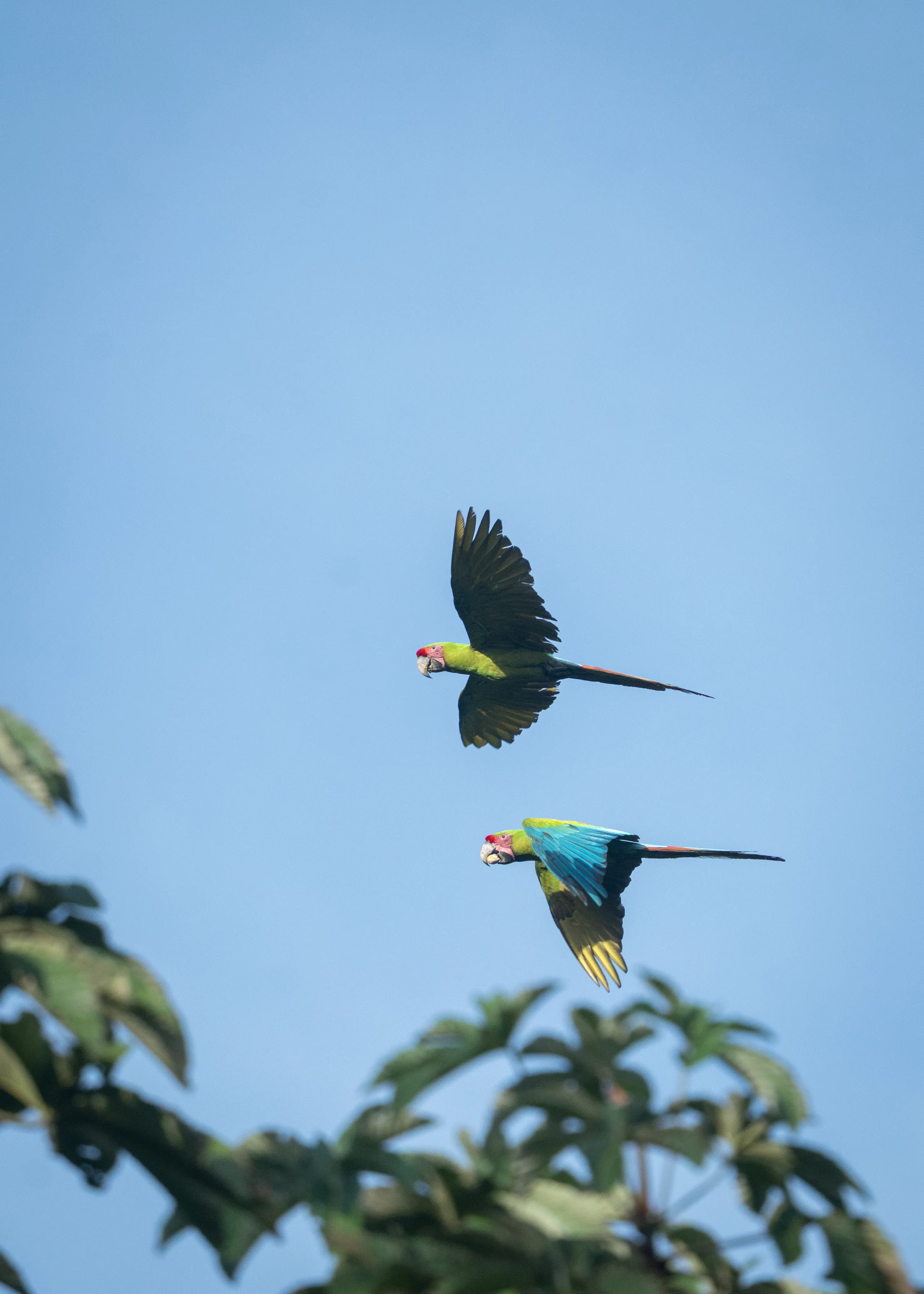
Due to the characteristics of the wood, Campano trees have been victims of overexploitation, which is why they are currently considered an endangered species, and their felling is completely prohibited. For this reason, from now on we will intensify our search for more adult Campano trees and pay close attention to their phenology, as they will be an important source of seeds for our efforts to reproduce species of importance to the local fauna.
With my spirit filled and inspired by this optimistic experience, I ended my morning walk by returning to camp to write in my field notebook, review my photographs, and then continue with the day's work.
There is much to be done, but perseverance is the way forward.