


“Silent helicopters devouring spiders, tearing them from their webs as they flap their wings with precision and coordination, in a mesmerizing flight.”
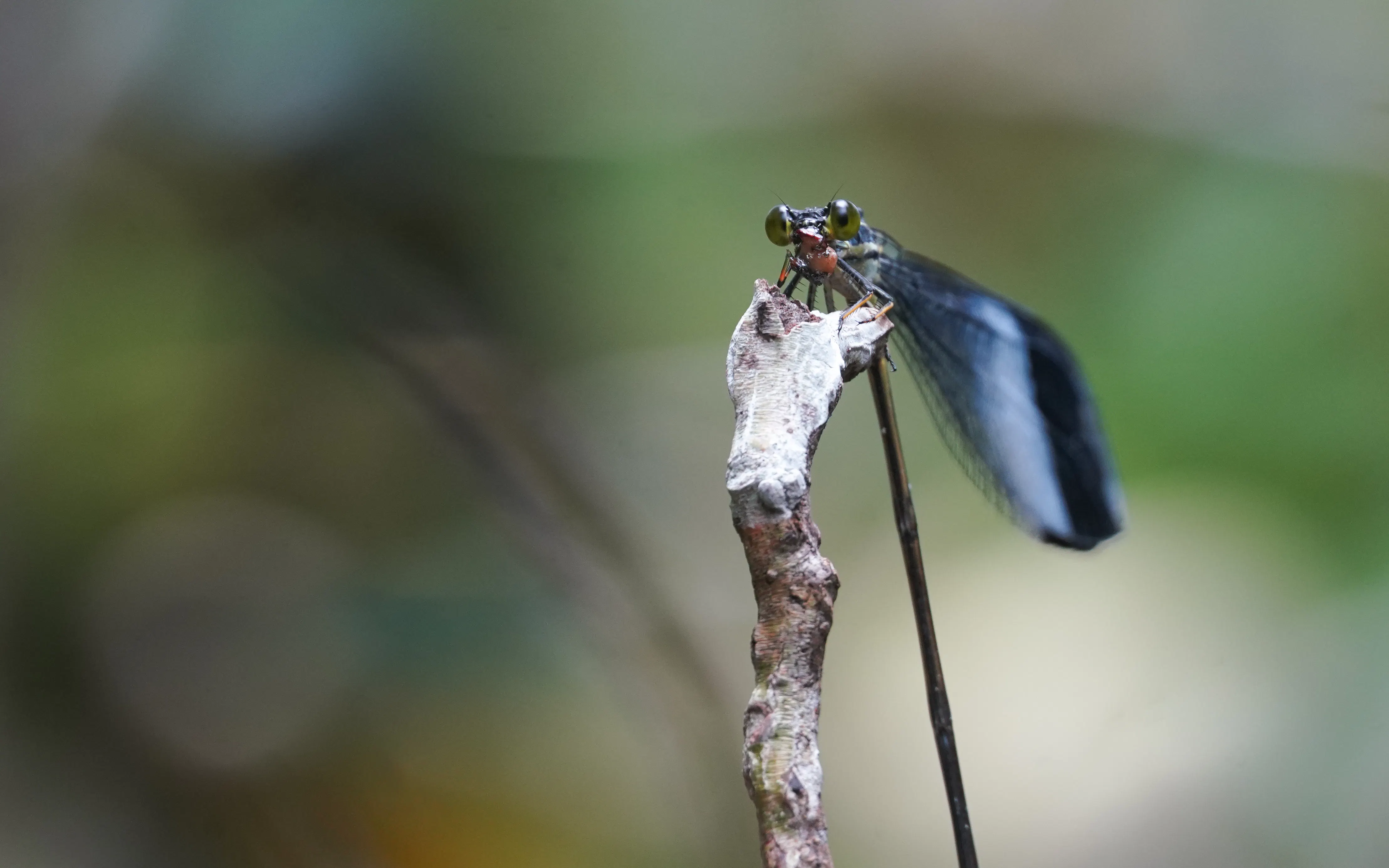
I wrote this little verse in my field notebook a couple of weeks ago, while walking through the mature forest of the Cerúlea Nature Reserve with the intention of checking the camera traps, as part of our wildlife monitoring program, when suddenly I observed a majestic, large damselfly wandering through the darkness of the forest and then, in a fraction of a second, propelling itself toward a spider web and feeding on its owner.
But let's go back in time, specifically to June 18, 2025, at 9:17 a.m., because I want to tell you more about this damselfly species.
On a sunny morning, Ernesto Carman and I were documenting epiphytic plants growing on an old fallen tree, which had left a clearing in the middle of the dark forest. Suddenly, we noticed a male Blue-winged Helicopter (Megaloprepus caerulatus) flying close to our heads. How could we not marvel at seeing one of the world's largest damselflies so close up? The slow and delicate flight of these enormous insects is a spectacle: the colored tips of their wings produce a unique visual effect, as if they were spinning completely, resembling the blades of a helicopter.
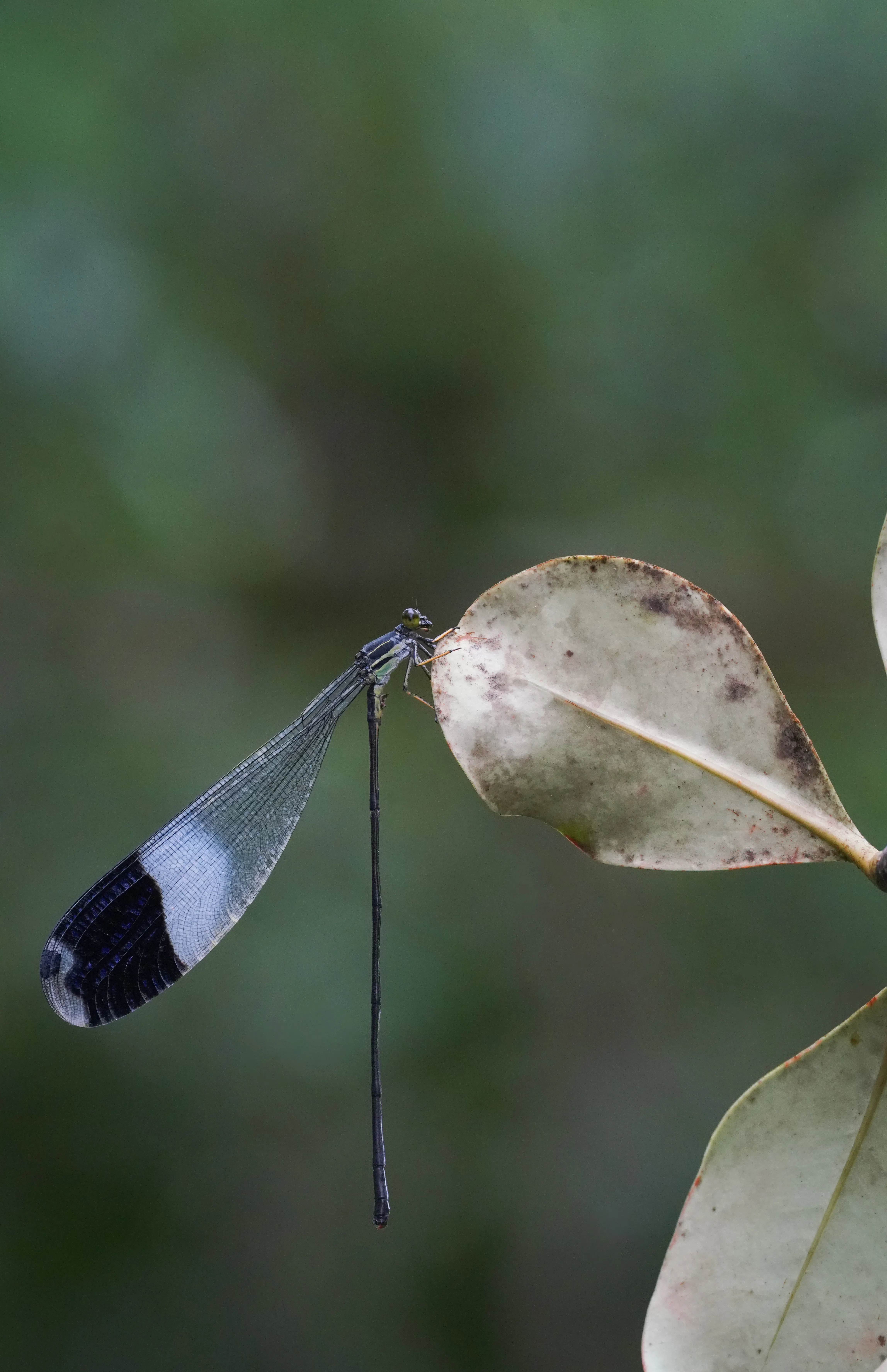
Minutes after rejoicing at that first individual, we began to observe two, then three, and finally six specimens in the same place. “What's going on here?” we wondered. And of course, it didn't take us long to begin formulating our first hypotheses.
As we approached the main trunk of the fallen tree, we discovered a cavity measuring about 15 × 20 cm, where a male had established his territory and was actively defending it from the other five that were trying to approach it. Every time an intruder approached, he confronted it in direct flight; he even chased it several meters up, until it was out of sight, then returned and perched elegantly in the vegetation near his cavity, making short visits to the edge of it.
After several minutes of observation, a smaller individual with a different wing pattern approached about 50 cm from the cavity. It was a female! Unlike what we had seen before, the male flew around her several times and then flew close to the cavity, as if “showing it to her.” After this display, the female landed briefly on a Clusia sp. plant, at our height. Then the male took her and they began to copulate. Together, they flew to a higher perch, about three meters above the ground, where they remained for a long time.
We had to continue with our work, so we were unable to witness the next phase in this couple's
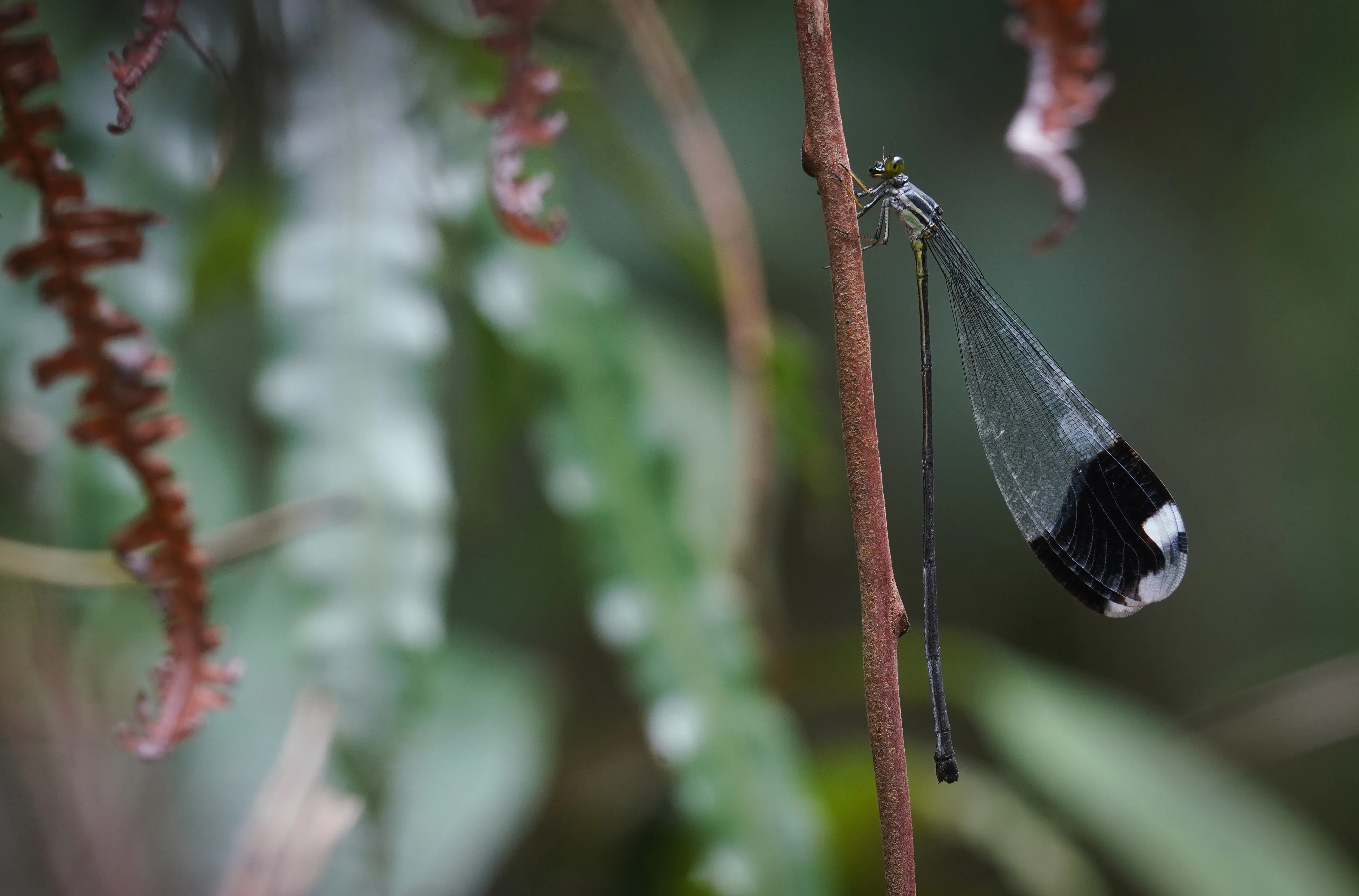
story. However, eleven days later, I returned to the same spot with Moisés Mata, and to our surprise, we found the territory still active. There, we were fortunate enough to observe a female perched on the edge of a larger cavity, which contained rainwater, in the same fallen tree, laying her eggs at the water's edge, followed by the male, who seemed to be guarding the area.
Examples like this, featuring such a fascinating species, remind us that death is a fundamental part of the dynamics of ecosystems. An old giant of the forest falling and dying is critical to the creation of unique habitats and microhabitats that are indispensable for a wide variety of organisms that depend on them for their survival.